
Gas Analyses
We are an established industry leader in performing gas compositional and isotopic analyses since 1985 for a variety of enterprises. If you have a specific need not listed, please contact us.
Chemical Composition
Basic GC
Standard chemical characterization of gas samples. Report includes concentrations of hydrocarbons methane through hexanes+ (C1-C6+) and major fixed gases, including nitrogen, carbon monoxide, carbon dioxide, and combined argon + oxygen concentrations.
Full GC
Complete chemical characterization of gas samples. Includes discrete values for argon and oxygen concentrations, and detection of helium and hydrogen from 25 parts per million to 100%.
Sampling Guidelines
Sample Container
Gas samples can be collected in IsoBags®, IsoTubes®, or steel cylinders.
Holding Time
As long as sample containers are not leaking gas, samples will maintain gas molecular and isotopic composition.
Shipping
See our Shipping Guidelines page for specific shipping information for gas containers.
Analysis Suites
| Analytes/properties tested for | Lowest Reportable Concentration | Highest Calibrated Concentration |
|---|---|---|
| Methane | 2 ppm | 100% |
| Ethane | 1 ppm | 30% |
| Ethylene | 1 ppm | 1% |
| Propane | 1 ppm | 30% |
| Propylene | 1 ppm | 1% |
| Isobutane/n-Butane | 1 ppm | 10% |
| Isopentane/n-pentane | 1 ppm | 2% |
| C6+ | 1 ppm | 1% |
| Hydrogen | 1% | 1% |
| Argon + Oxygen | 200 ppm | 20.9% |
| Nitrogen | 100 ppm | 100% |
| Carbon Monoxide | 100 ppm | 10% |
| Carbon Dioxide | 50 ppm | 100% |
| Analytes/properties tested for | Lowest Reportable Concentration | Highest Calibrated Concentration |
|---|---|---|
| Methane | 2 ppm | 100% |
| Ethane | 1 ppm | 30% |
| Ethylene | 1 ppm | 1% |
| Propane | 1 ppm | 30% |
| Propylene | 1 ppm | 1% |
| Isobutane/n-Butane | 1 ppm | 10% |
| Isopentane/n-pentane | 1 ppm | 2% |
| C6+ | 1 ppm | 1% |
| Hydrogen | 25 ppm | 100% |
| Helium | 25 ppm | 100% |
| Argon | 50 ppm | 100% |
| Oxygen | 100 ppm | 20.9% |
| Nitrogen | 100 ppm | 100% |
| Carbon Monoxide | 100 ppm | 10% |
| Carbon Dioxide | 50 ppm | 100% |
High-Precision Stable Isotopes
Isotech uses an off-line method to generate high-precision stable isotope ratios of carbon and hydrogen in hydrocarbon gas samples. Each sample is separated into its components, each component is combusted, and the combustion products are collected and sealed in a glass ampoule using a vacuum system. The combustion products are then analyzed on a dual-inlet IRMS. This method is much more labor-intensive and time-consuming, but allows us to achieve unbeatable precision: 1 sigma is 0.1‰ for δ13C measurements, and 3.5 ‰ for δ2H measurements.
Isotech has the capability to analyze δ13C and δ2H in hydrocarbons C1-C5; and δ13C of CO2.
Sampling Guidelines
Sample Container
Gas samples can be collected in IsoBags®, IsoTubes®, or steel cylinders.
Holding Time
As long as sample containers are not leaking gas, samples will maintain gas molecular and isotopic composition.
Shipping
See our Shipping Guidelines page for specific shipping information for gas containers.
Analysis Suites
| Analytes/properties tested for | NG-1 | NG-2 | NG-3 | NG-4 |
|---|---|---|---|---|
| Full GC | yes | yes | yes | yes |
| δ13C and δD of methane | yes | yes | yes | yes |
| δ13C of ethane and propane | no | yes | yes | yes |
| δ13C of Iso- and normal-butane | no | no | yes | yes |
| δ13C of Iso- and normal-pentane | no | no | no | yes |
Custom analysis packages available on request. Call us at (217) 398-3490 or email DLChampaignProjectManagement@stratumreservoir.com for a quote.
Standard-Precision Stable Isotopes
When results are needed faster, analytical precision is not as crucial, or hydrocarbon gas concentrations are lower, Isotech offers the typical online gas chromatography-isotope ratio mass spectrometry method to measure the stable isotope ratios of carbon and hydrogen in hydrocarbon gas samples. Due to this process not involving the more labor-intensive steps in the high-precision stable isotope analysis preparation, the 1 sigma is 0.3‰ for δ13C measurements and 5 ‰ for δ2H measurements.
Sampling Guidelines
Sample Container
Gas samples can be collected in IsoBags®, IsoTubes®, or steel cylinders.
Holding Time
As long as sample containers are not leaking gas, samples will maintain gas molecular and isotopic composition.
Shipping
See our Shipping Guidelines page for specific shipping information for gas containers.
Radioisotopes
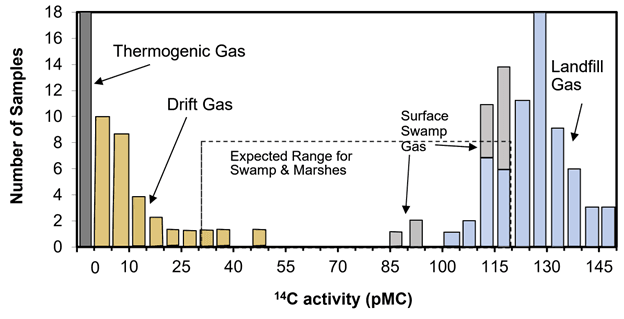
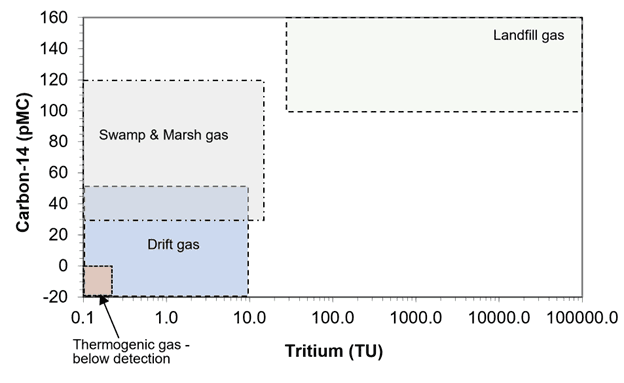
Carbon-14 (14C) of methane or carbon dioxide
Tritium (3H) of methane
Sampling Guidelines
Sample Container
Gas samples for 14C of methane can be collected in IsoBags®, IsoTubes®, or steel cylinders.
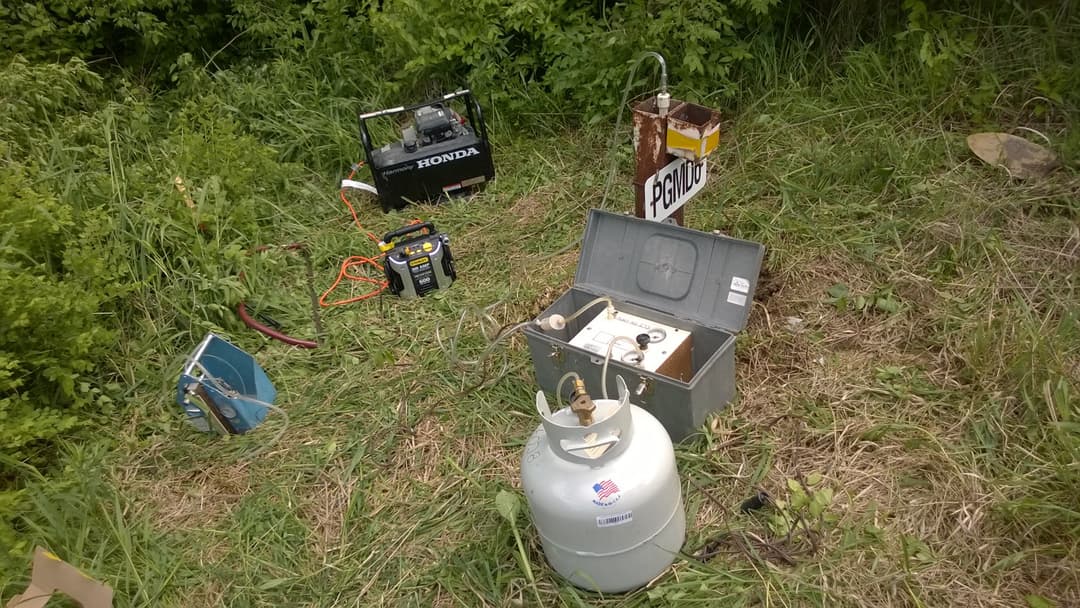
Gas samples for 3H of methane need to be collected in ~18 liter LP tanks that have been pre-evacuated and are pressurized to 20 psi using a pump. It is important to ensure that there are no leaks in the connections and that liquid does not get into the LP tank. A specific SOP for collecting gas samples for tritium analysis is provided.
Holding Time
As long as sample containers are not leaking gas, samples will maintain gas molecular and isotopic composition.
Shipping
See our Shipping Guidelines page for specific shipping information for gas containers.
Analysis Suites
| Analytes/properties tested for | BG-1 | BG-2 | BG-3 |
|---|---|---|---|
| Full GC | yes | yes | yes |
| δ13C and δD of methane | yes | yes | yes |
| δ13C of CO2 | yes | yes | yes |
| 14C of methane | no | yes | yes |
| 3H of methane | no | no | yes |
Hydrogen Sulfide (H2S) Isotopes
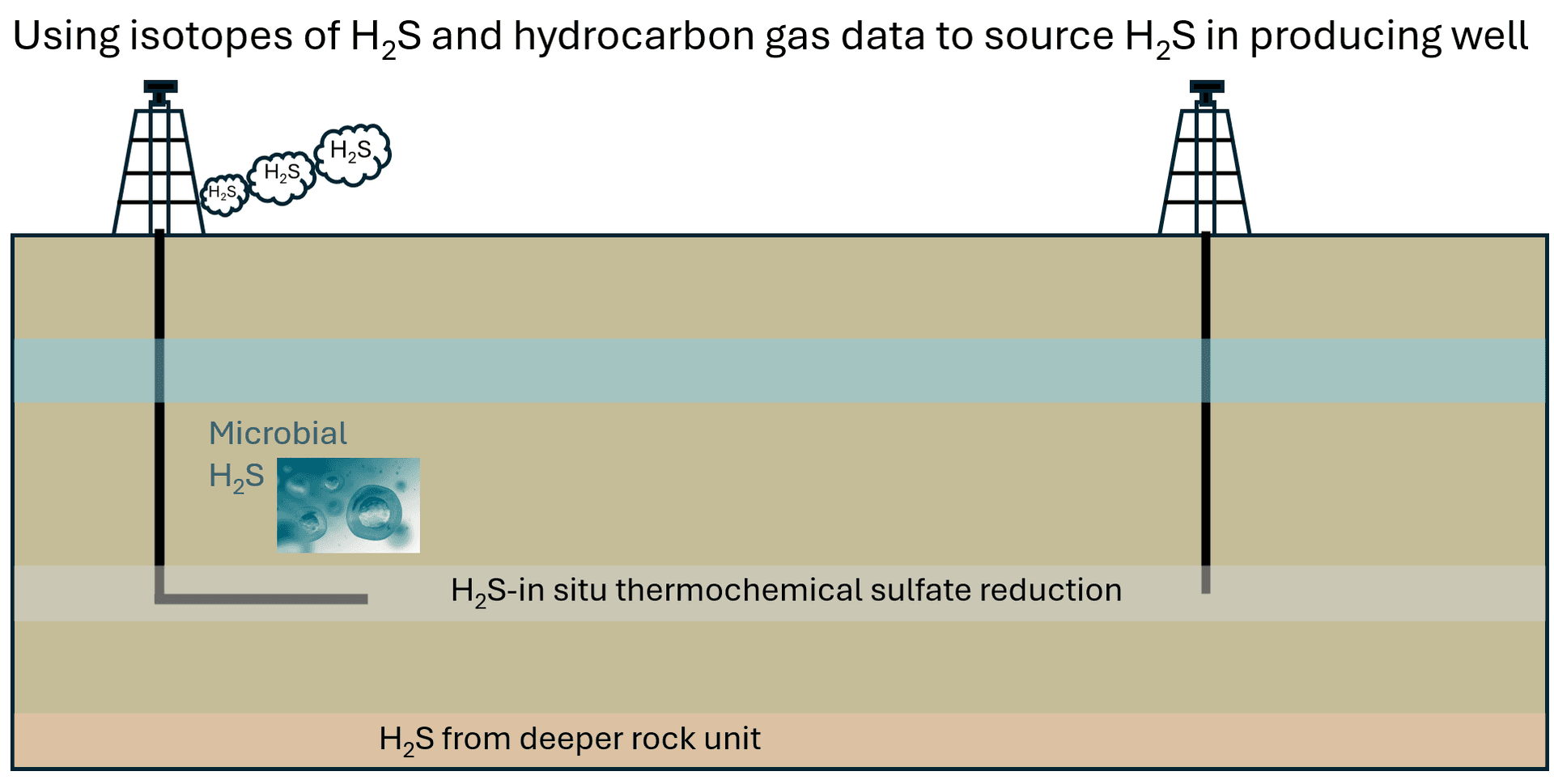
Hydrogen Sulfide is a toxic gas that is dangerous to human health and is costly to remove from produced gas streams. Isotech is not a sour gas lab and therefore cannot receive sour gases. Therefore, our team provides sampling equipment that removes H2S or converts it to a solid form to ship without HAZMAT restrictions to determine the sulfur isotopic composition of H2S to assess the source of H2S. We also sell equipment to remove H2S from gas for analyses of other parameters.
Sampling Guidelines
Sample Container
The H2S IsoTrap®. Gas flowed through the IsoTrap is converted to a non-hazardous material that can be shipped without HAZMAT protocols. The IsoTrap® has a color indicator that denotes when enough H2S has been captured for analysis. A minimum of 15 psi of pressure is required for gas sample collection.
Sample Size
Gas is flown through the IsoTrap for isotopic analysis, the volume of gas needed to be flown through the IsoTrap® is dependent on the concentration of H2S in the gas stream.
Holding Time
After properly collecting a sample, there is no limit on how long an IsoTrap can be stored.
Shipping
See our Shipping Guidelines page for specific shipping information for gas containers.
Dissolved Gas
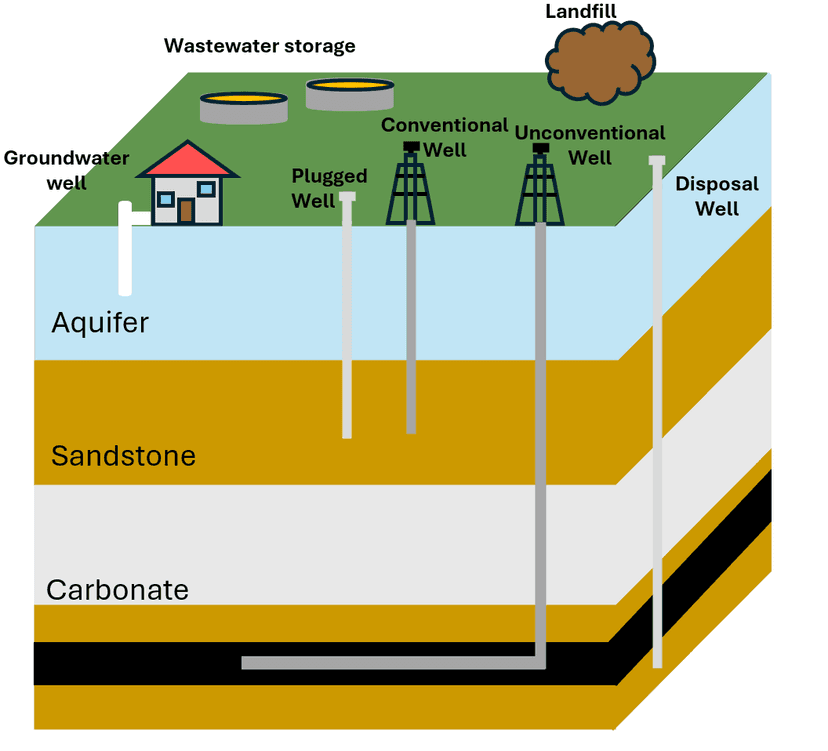
Our team determines the dissolved gas composition of water samples collected in IsoFlasks®. Analytical reports include a full compositional and isotopic analysis of the headspace, concentration of methane, ethane and propane dissolved in the water, and carbon and hydrogen isotope values for individual gas components. Dissolved gas concentrations are available for additional components upon request. Below is a diagram showing some sources of stray gas that could migrate into a groundwater well.
Sampling Guidelines
Sample Container
The IsoFlask® is the recommended container for this analysis.
Sample Size
We recommend that you fill the IsoFlask with 600-750 mL of water. If you wish to use a bottle method for collection please contact us for recommendations. Note that other sampling containers may over or under represent the gas content of the water. We do have the capability to analyze dissolved gas from 40 mL VOA vials or similar sized containers. However, the amount of gas available could severely limit the isotopic work possible.
Preservative
IsoFlasks have a biocide that prevents microbial action and should be kept from excessive heat and sunlight. Other containers require refrigeration and shipment on ice.
Holding Time
IsoFlasks can be held unrefrigerated for up to two months. For other containers, if the sample is kept refrigerated, we recommend shipping the sample to us within two weeks of sampling.
Shipping
IsoFlasks can be shipped using your preferred method. For other containers, we recommend the sample be shipped on ice and overnighted to the lab. Please do not ship on a Friday as we only receive samples Monday through Friday.
Analysis Suites
| Analytes/properties tested for | GC Only | DG-1 | DG-2 |
|---|---|---|---|
| Dissolved Gas GC | yes | yes | yes |
| Concentration of methane, ethane, and propane dissolved in water | yes | yes | yes |
| δ13C and δD of methane | no | yes | yes |
| δ13C of ethane and propane | no | no | yes |
Questions we can answer
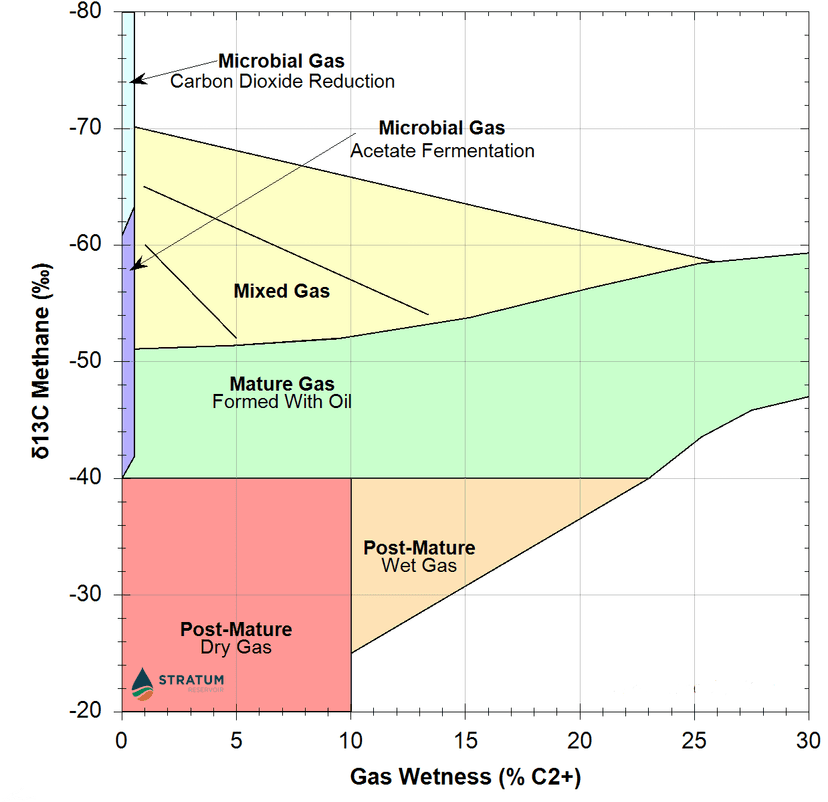
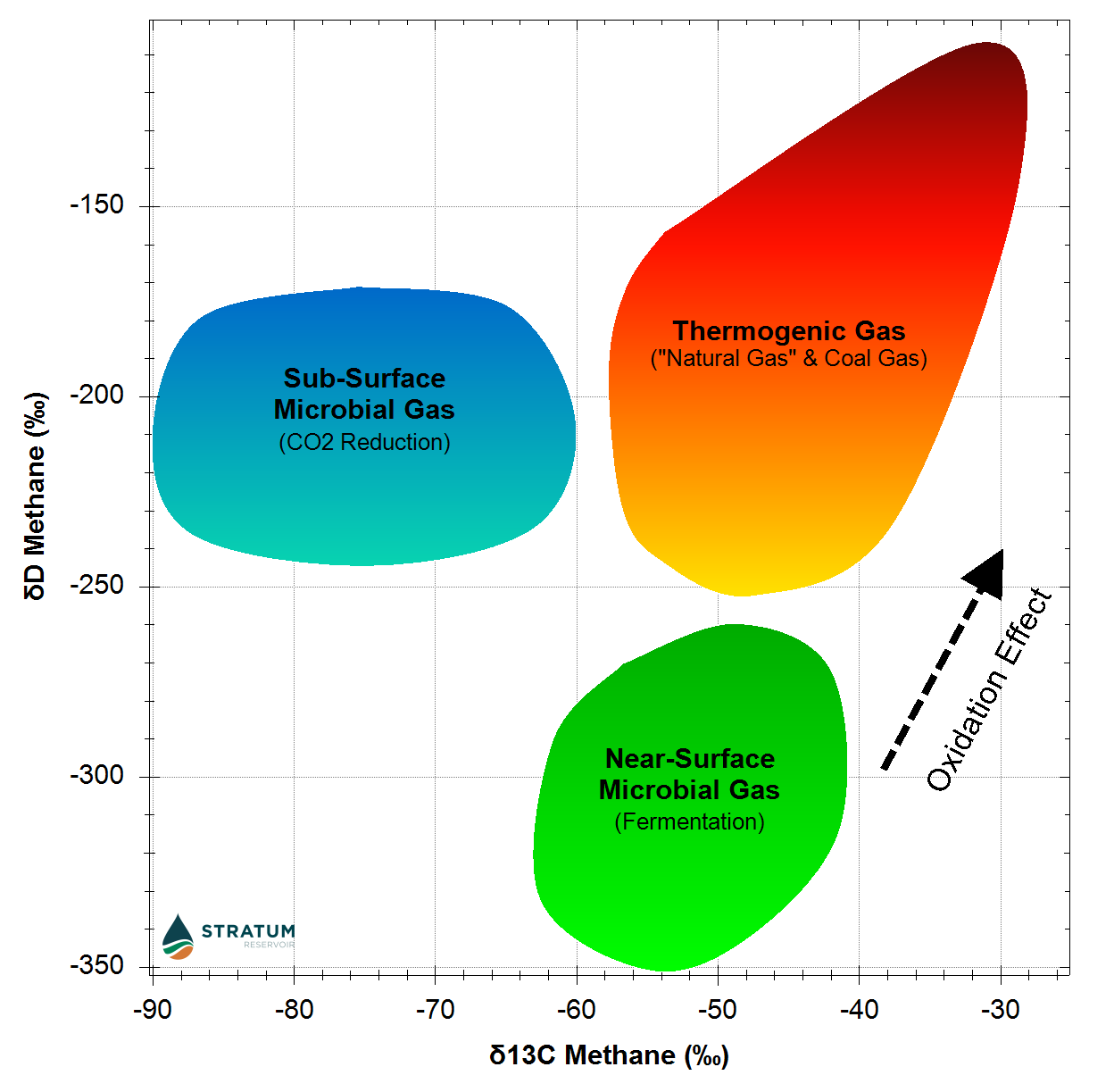
- Is stray natural gas from a leaking pipeline, gas storage reservoir, swamp, microbial drift gas, coal mining, oil spill, gasoline spill, abandoned well, or a producing oil or gas well?
- Did storage gas enter a producing well? If so, what proportion of gas is storage gas and native gas in the producing well?
- Is gas from the tubing of a well leaking into the annulus spacing of the well? Could gas in the annulus space of a well be from shallower hydrocarbon bearing units or from microbial activity?
- Could hydrocarbon gas be migrating into the soil gas zone and if so, what is the source of that hydrocarbon gas?
- Has stray gas undergone oxidation?
- What geologic unit is gas from in a producing well? If there is a mixture of gas sources, what is the proportion of gas from each source?
- Is microbial methane formed by near surface fermentation or deeper sub-surface carbon dioxide reduction processes?
- Did I discover economically viable concentrations of hydrogen or helium?
- While drilling a well could I be drilling through other hydrocarbon bearing units suitable for extraction?
- Did gas originate from a landfill or an alternative source?